
Geriatric Physiotherapy in Hilversum
Geriatrics is the medical specialty that focuses on treating older adults and people whose illness causes age-related symptoms (for example Parkinson's disease or rheumatoid arthritis).
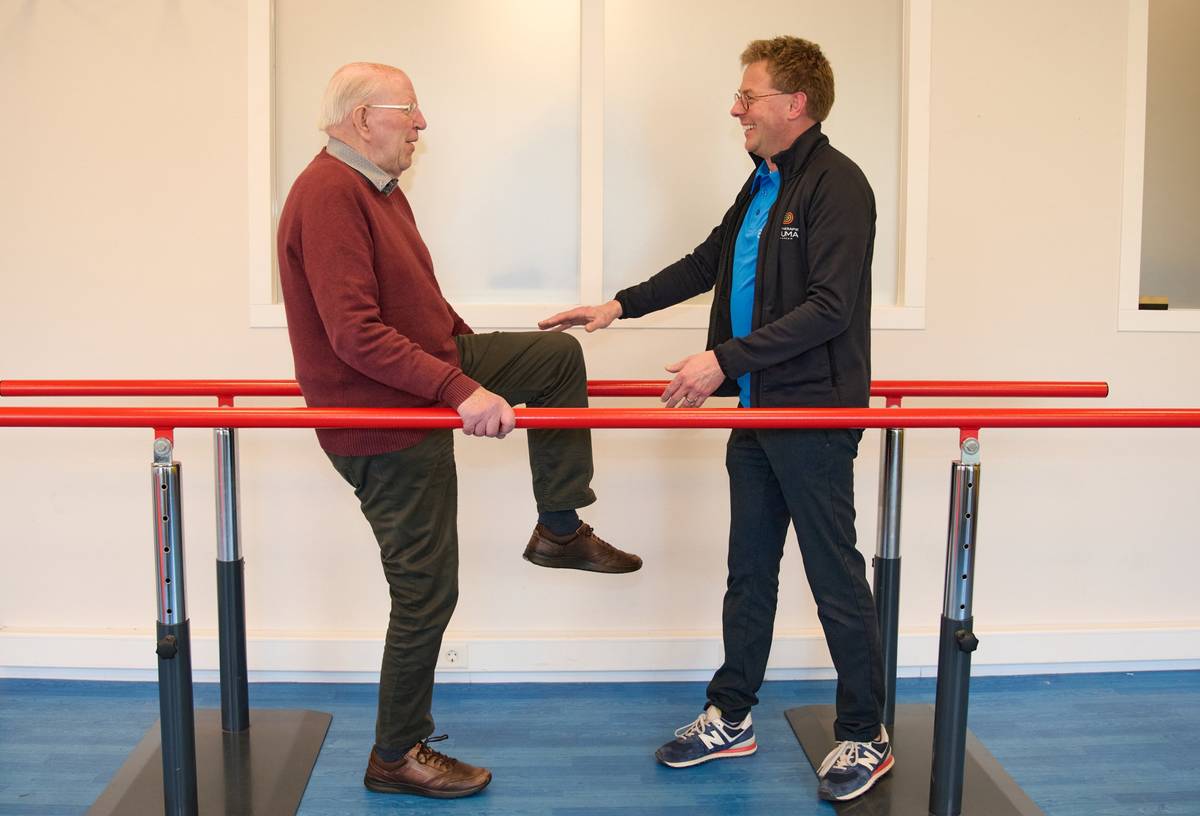
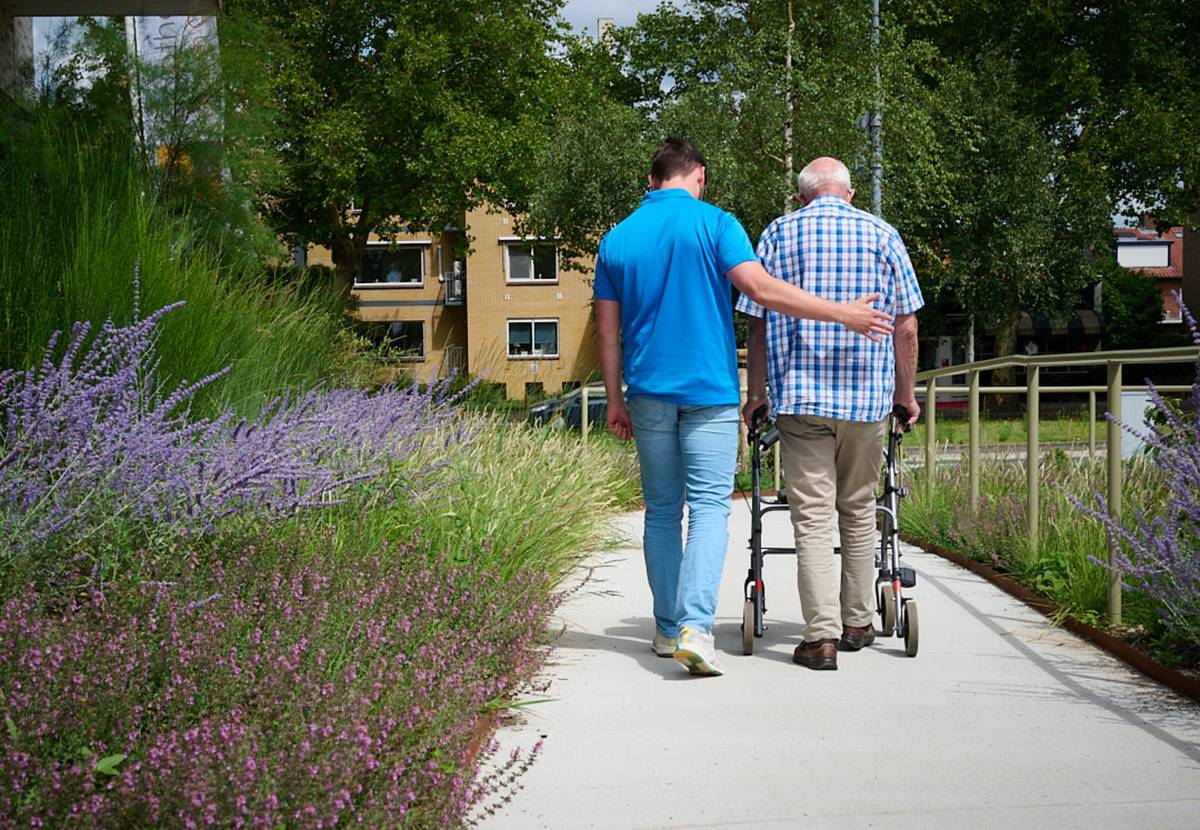
Indications for geriatric physiotherapy
- Increased risk of falling
- Dizziness
- Neurological complaints (stroke, Parkinson's, MS, etc.)
- Physical complaints
- Reduced balance
- Memory problems (dementia, Alzheimer's, etc.)
More about geriatric physiotherapy
Geriatrics therefore covers more than just memory problems or dementia — it concerns the whole person: all physical and mental complaints and problems.
Recognising and identifying geriatric problems is a distinct specialty, with the aim of providing optimal medical care for older adults. Many older patients have already seen a geriatrician in hospital: the doctor specialised in geriatrics. A visit to this specialist often avoids a tour of multiple hospital departments, because this doctor understands every aspect and can connect different complaints. If needed, the geriatrician will refer you on to a specific department.
Geriatric physiotherapy focuses specifically on optimising posture and movement in the home setting.

What does a geriatric physiotherapy session involve?
Treatment usually consists of exercise therapy, advice and coaching of desired changes. The aim is to resolve, reduce and prevent complaints during everyday movement and to prevent decline. Advising and supporting caregivers, family members and informal carers is also part of the work.
Are you experiencing balance problems?
Balance problems
Balance often deteriorates with age or following illness. There can be several causes:
- Muscle strength and fitness may decline.
- Balance also depends on the vestibular system and the mobility of your neck. The sensory receptors and the way muscles are controlled throughout the body are also important.
- After a stroke, balance problems can occur: for example one-sided paralysis or reduced sense of balance and of body position in space (missing objects when reaching).
- Parkinson's can also cause balance problems — often a shuffling gait, a stooped posture, propulsion (the body’s centre of gravity too far forward), festination (taking smaller and smaller steps when walking) and freezing (becoming ‘stuck’, glued to the floor).
- Dizziness when getting up from bed or a chair can also increase the risk of falling (orthostatic hypotension).
- Finally, environmental factors such as wearing good footwear instead of loose slippers, and removing rugs, thresholds and cables from the home, also influence fall risk.
In all of the above examples, the risk of a fall is increased. Many of these factors can be influenced by (geriatric) physiotherapy and occupational therapy, reducing the risk of falling. A walking aid such as a rollator can sometimes help, but incorrect use can also increase fall risk.
Dizziness and balance complaints
Dizziness and balance problems can cause falls and anxiety. It is therefore important to address them. Dizziness and balance problems are described as an uncontrollable sense of spinning or movement, a light-headed feeling, the sensation of fainting, and/or unsteadiness in the legs. These feelings are very unpleasant and sometimes frightening.
Dizziness and balance problems can have various causes. In some cases — especially in older adults — no clear cause can be identified. The list below shows different types of dizziness:
- Spinning vertigo
- Light-headedness
- Unsteadiness in the legs
- Balance problems
- Fainting episodes
Our multidisciplinary collaboration helps you further
To support you as effectively as possible, the geriatric physiotherapist works closely with other disciplines. There is frequent contact and consultation with GPs, care workers and nurses, occupational therapists and informal carers (partners, family, neighbours, friends who help). The geriatric physiotherapist can also advise you on dietetics or speech therapy.
Contact with informal carers is very important for the geriatric physiotherapist. In older age, not only the person concerned but also their informal carers are often involved with the age-related complaints. The geriatric physiotherapist can advise on the carers’ questions about supporting the patient — for example how to help someone who has difficulty getting out of bed, or what cue (such as counting) can help someone with Parkinson's walk well. The geriatric physiotherapist often works closely with the occupational therapist for this. For information on occupational therapists we work with, see Ergotherapie Gooi en Omstreken.
People who are getting older and/or have an illness that reduces mobility usually come into contact with the geriatric physiotherapist. The geriatric physiotherapist has broad knowledge and expertise in age-related illnesses and complex problems, with a wide perspective and the skills to support and treat older adults optimally.
Frequently asked questions about geriatric physiotherapy
Have another question? We are happy to help!