
Dry Needling Hilversum
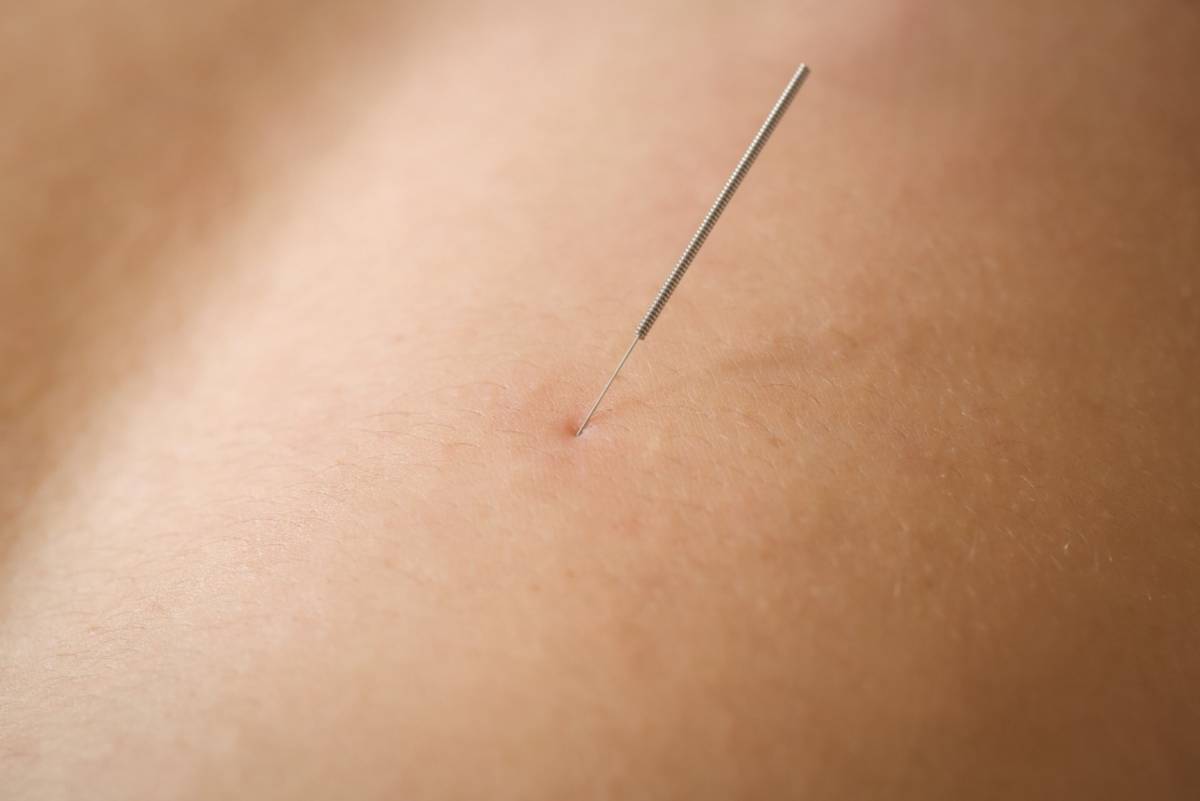
Dry needling is a treatment technique in which a very thin needle is inserted into the skin and muscle. It is extremely effective for treating myofascial pain and trigger points. Trigger points are small hardenings in a muscle that can cause radiating pain. “Dry” indicates that nothing is injected with the needle: it is only inserted into the trigger point.
Indications for dry needling
- Myofascial pain and the presence of trigger points.
- Radiating pain due to hardenings in muscles.
- Muscle overload due to poor posture or lifestyle habits.
- Acute overload due to an incorrect movement or accident.
- Gradually increasing muscle complaints without a clear cause.
- Muscle stiffness or difficulty relaxing muscles.
- Muscle complaints worsened by stress or fatigue.
- A need for fast pain reduction and restoration of muscle function.
- Part of physiotherapy to deactivate trigger points.
- Feeling of stuck or locked muscles.
More about dry needling
Dry needling is a treatment technique in which a very thin needle is inserted into the skin and muscle. It is extremely effective for treating myofascial pain and trigger points. Trigger points are small hardenings in a muscle that can cause radiating pain. “Dry” means nothing is injected: only the trigger point is needled.

Dry needling treatment
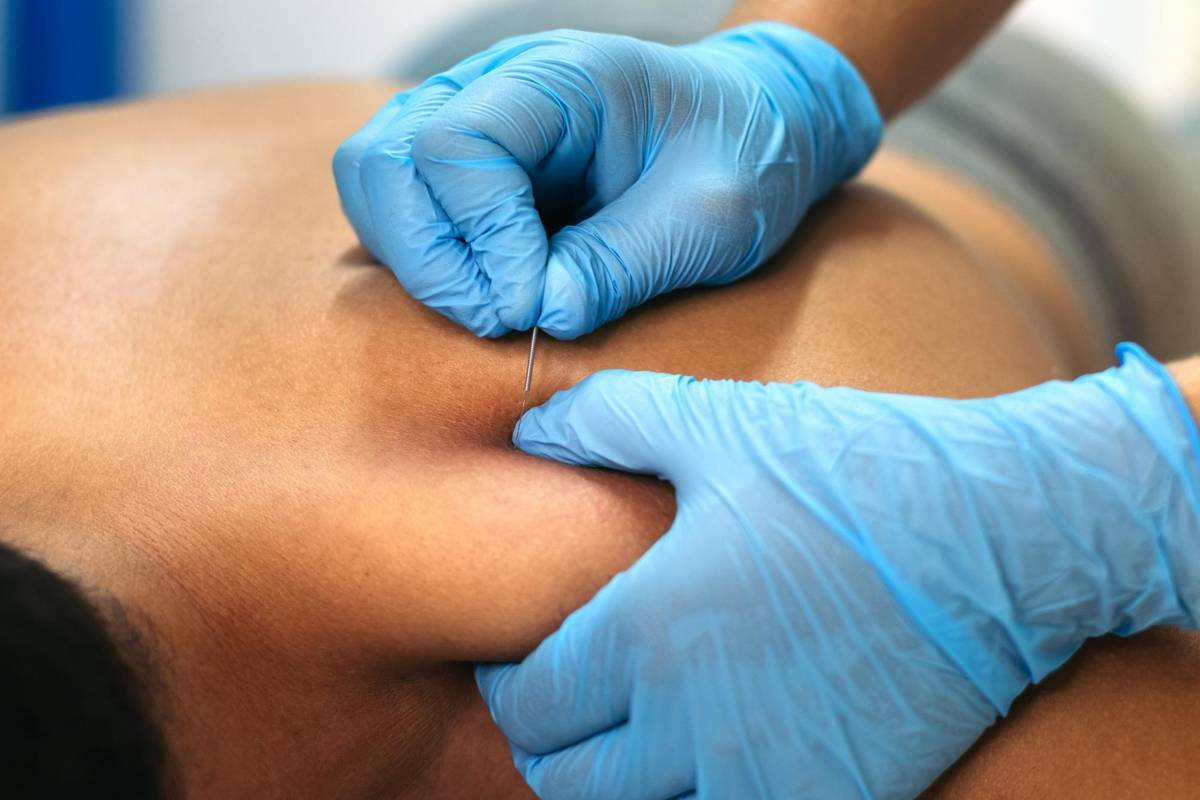
The sterile needles used for dry needling are very thin. The therapist first feels where the taut band and trigger point are located. The trigger point is fixed between two fingers, after which the needle is quickly tapped through the skin. This is nearly painless. The physiotherapist then moves the needle through the muscle towards the trigger point — a dull, non-painful sensation. When the tip of the needle reaches the trigger point, the muscle reacts with a small twitch. The therapist moves the needle up and down to release as many fibres from the trigger point as possible.
After the therapy you may feel radiating sensations, depending on the number of trigger points in the muscle. A vegetative reaction can also occur — feeling nauseous, sweaty or light-headed. These reactions are unpleasant but transient. Because they can occur, treatment is always given in a lying position.
Trigger points in dry needling
A trigger point is a pressure-painful spot in the muscle that, alongside local pressure pain, often causes referred pain. The physiotherapist looks for these spots because they are often the main cause of your complaints.
Trigger points can develop in different ways. The most common cause is chronic muscle overload — for example through prolonged poor work posture or unhealthy lifestyle habits. Acute overload, such as an incorrect movement or an accident, can also cause trigger points.
Sometimes the cause of the complaint is clear to the patient, but often it isn’t: the complaints have developed and increased gradually. Most complaints arise from a combination of factors — overload of a specific muscle plus unfavourable conditions such as stress, fatigue, poor sleep, poor diet, or difficulty relaxing.
Once the pain has been mapped, the therapist searches for the muscles that could be causing the pain. Muscle length, muscle strength and the presence of trigger points are assessed. Trigger points sit in a hardened band in the muscle and feel like a local thickening. Pressure on the trigger point can be very painful and often elicits the patient’s recognisable complaints.
Frequently asked questions about dry needling
Have another question? We are happy to help!